At least 30% of enterprise data is redundant, obsolete, or dark data, and organizations spend up to $34 million holding onto information that could be deleted, while regulators have issued about $3.4 billion in related fines since 2020. For organizations in North Carolina, automated retention lifecycle and auto-destruction policies are now essential to control that risk, not a future nice-to-have.
Key Takeaways
| Question | Answer |
|---|---|
| What is an automated retention lifecycle? | It is a rules-based approach that assigns retention periods to records, tracks them from creation to final disposition, and triggers secure destruction automatically using integrated records management services. |
| How do auto-destruction policies reduce risk? | They systematically remove data that has met its legal and business requirements, lowering exposure in audits, investigations, and breaches, and supporting HIPAA compliant document storage practices. |
| Do automated retention policies work for both paper and digital files? | Yes, when combined with document scanning services, you can manage physical and digital records under one unified lifecycle, from intake through secure destruction. |
| What role does secure shredding play in auto-destruction? | Secure document shredding is the physical end point of automated retention, providing a documented, NAID AAA certified chain of custody from your site to final destruction. |
| Can we assess if our current retention practices are defensible? | Yes, a structured records management audit identifies gaps in policies, storage, and destruction so that automated rules can be implemented confidently. |
| How do we budget or plan for an automated lifecycle program? | You can start with a tailored proposal from our team and align services like offsite storage, scanning, and shredding using the request a quote tool. |
| Which industries benefit most from automated retention? | Any regulated organization benefits, and our industry-specific records management solutions support healthcare, legal, financial services, education, and more across North Carolina. |
1. What Automated Retention Lifecycle Really Means For Your Organization
An automated retention lifecycle is the structured journey your records take from creation, through active use and storage, to final, documented destruction. Instead of relying on manual reminders or ad hoc cleanups, the lifecycle is driven by retention rules that are tied to record type, regulation, and business need.
For organizations in Charlotte and across North Carolina, this lifecycle connects directly to day-to-day business records management. It affects how you onboard new documents, classify them, control access, and decide when it is safer to destroy than to keep storing. Automated retention is not only a technology feature, it is a disciplined way of working that typically sits on top of professional records management services.


Core stages of an automated retention lifecycle
- Capture and classification of records, whether paper or digital.
- Active use in daily operations with appropriate access controls.
- Inactive storage in secure facilities or digital archives.
- Retention monitoring against legal and policy requirements.
- Auto-destruction once retention periods and exceptions are met.
When these stages are automated, retention dates are calculated, monitored, and acted on by system rules. Physical boxes in offsite facilities and digital files in repositories can share the same retention logic, so you have a single, defensible framework.
2. Why Auto‑Destruction Policies Are Now A Compliance Requirement, Not An Option
Auto-destruction policies define how and when information is permanently destroyed once it is no longer needed or allowed to be kept. Regulators increasingly expect organizations to show that they do not over-retain sensitive information, especially in healthcare, financial services, and government.
In North Carolina, this is especially important for organizations that rely on HIPAA compliant document storage and similar regulatory frameworks. Keeping medical, financial, or student records “just in case” creates unnecessary liability in audits, investigations, and data breaches. Automated destruction, tied to documented retention schedules, closes that exposure.

Key goals of auto-destruction policies
- Prevent over-retention of personal and confidential information.
- Align destruction timing with statutory and contractual requirements.
- Ensure that destruction is documented, repeatable, and legally defensible.
Effective auto-destruction integrates with secure document shredding on the physical side and secure digital deletion processes on the electronic side. Both must produce evidence of completion, such as certificates of destruction and audit logs.
3. Building A Defensible Retention Schedule For North Carolina Regulations
Automated retention and destruction only work if your underlying retention schedule is sound. A defensible schedule maps each record category to applicable federal and state laws, industry regulations, and internal business needs.
For example, healthcare organizations in Charlotte must balance HIPAA, state medical record laws, payer requirements, and clinical needs. Financial institutions and law firms must align retention to GLBA, SOX, state bar rules, and statute of limitations timelines. Our role as a records management company in Charlotte is to help structure those requirements into clear, actionable rules.

How we typically structure a defensible schedule
- Inventory your key record types across departments.
- Map regulations and best practices to each category.
- Set retention periods and grace windows for litigation holds and audits.
- Align physical and digital rules so paper and electronic copies follow the same timelines.
- Configure automation in your records management and storage systems.
A dedicated records management audit is often the best starting point. It reveals where retention rules are missing, outdated, or not being followed, so automated lifecycle controls can be implemented with confidence.
An illustrated guide to the 5-step automated retention lifecycle and auto-destruction policies. It explains how data is retained, governed, and destroyed at each stage.
4. Connecting Physical Document Storage To Automated Retention Rules
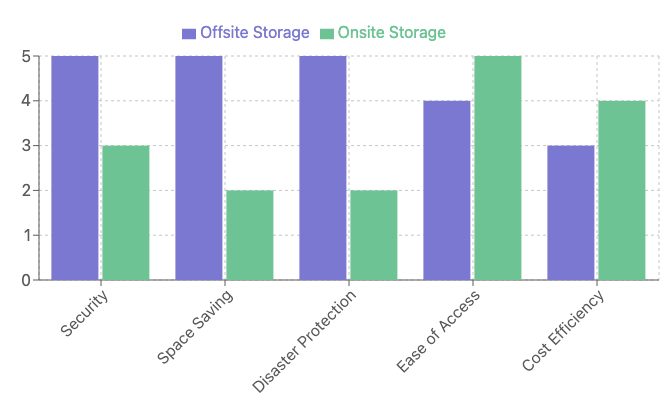
Automated retention is often discussed as a purely digital concept, but your physical files must follow the same lifecycle. If your paper archives in Charlotte are not tied into your retention schedule, you will continue to carry unnecessary risk and cost.
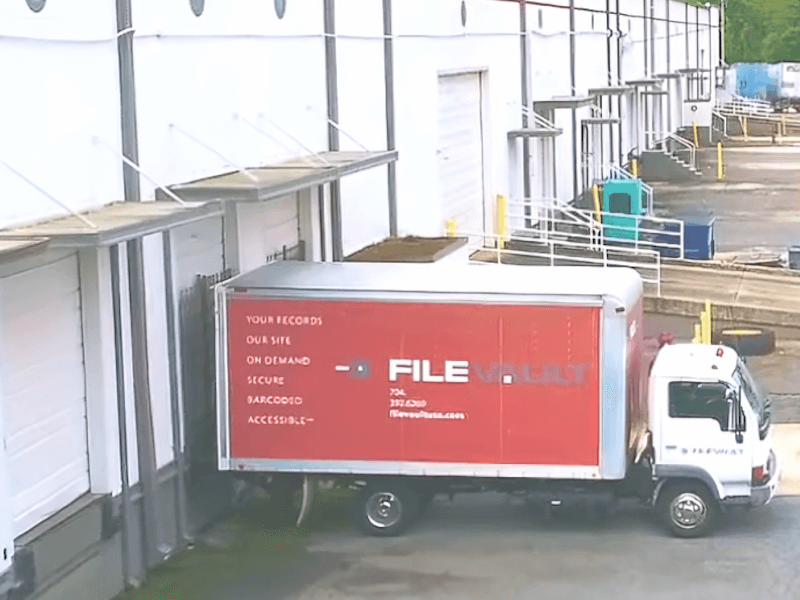
Our secure offsite document storage in Charlotte is designed to integrate tightly with retention and destruction policies. Every box and file is barcoded and indexed so that retention dates, legal holds, and destruction eligibility can be tracked at a granular level.
How physical storage supports automated retention
- Barcode / RFID tracking connects each carton or file to its retention rule.
- System alerts flag records that are approaching destruction eligibility.
- Automated workflows generate destruction lists and approvals for secure shredding.
With this model, offsite storage is no longer a passive warehouse. It becomes a controlled environment where your retention lifecycle is executed in a predictable, auditable manner.
5. Using Document Scanning To Bring Paper Under Digital Retention Control
Automated retention works best when your critical paper records are digitized and indexed. Document scanning services give you the ability to govern both formats with the same policy engine, improving control and access.
We help North Carolina organizations prioritize which records to scan based on risk, regulatory requirements, and retrieval needs. High-value documents can be scanned in bulk, while low-use archives remain in secure storage under the same retention schedule.

Why scanning is central to the retention lifecycle
- Digital images can be tied directly to retention metadata and legal holds.
- OCR and indexing make it easier to respond to investigations and privacy requests.
- Paper originals can be destroyed once quality and compliance checks are complete, if your policies allow.
This integration of scanning with storage, retention, and auto-destruction gives you a clear, unified chain of custody for both physical and digital records.
6. Secure Shredding As The Final Step In Auto‑Destruction
No automated retention lifecycle is complete without a disciplined, verifiable destruction process. Secure document shredding is the physical end point that eliminates outdated paper records while proving that destruction was done correctly.
Our NAID AAA certified secure shredding services in North Carolina are built to support auto-destruction policies. Once records reach the end of their retention lifecycle, system workflows trigger shredding events, produce destruction lists, and generate certificates for your compliance files.

Features that support automated destruction
- Verifiable chain of custody from your site to our shredding facility.
- Certificates of destruction tied back to specific retention events or record series.
- Onsite and offsite options aligned with your security and logistics needs.
By integrating shredding with your retention rules, you move away from one-time purge projects and toward a controlled, continuous process that steadily reduces risk.
7. Handling Data Subject Requests Within The Retention Lifecycle
As privacy regulations expand, organizations must respond to deletion and access requests efficiently. Retention lifecycle automation directly impacts how quickly and accurately you can find, review, and delete records that relate to an individual.
When your business records management program aligns physical storage, electronic systems, and destruction workflows, you can respond to data subject requests without panicked searches or manual reconciliations. Records that are already past due for destruction are removed in advance, narrowing the field you need to review.

Benefits for privacy and data rights handling
- Faster response times because records are indexed and retention-aware.
- Reduced manual review since expired data has already been destroyed.
- Improved defensibility when regulators ask how deletion requests are honored.
Integrating privacy workflows into your retention lifecycle ensures that legal and operational teams are working off the same, consistent set of rules and controls.
8. Industry‑Specific Retention And Auto‑Destruction Considerations
Different sectors in North Carolina face different retention and destruction demands. A single, generic schedule rarely serves healthcare, legal, banking, and education with equal effectiveness.
Our industry-focused approach to records management services considers how each sector operates, what regulators expect, and where your greatest risk sits. Healthcare may prioritize clinical and billing records, while manufacturers might focus on quality records, product documentation, and safety compliance.
Examples of industry-specific needs
- Healthcare: HIPAA retention, imaging records, and coordinated destruction of PHI.
- Legal: Case file retention aligned to statute of limitations and bar rules.
- Finance: GLBA, SEC, and banking regulations that dictate both minimum retention and secure destruction requirements.
Our industry solutions help you tailor retention schedules and destruction workflows so that your lifecycle controls reflect practical operational realities within your sector.
9. Governance, Chain Of Custody, And Documentation
Automating retention and auto-destruction is about governance as much as technology. Stakeholders must understand the rules, chain of custody must be clear, and documentation must be complete enough to satisfy auditors or courts.
We focus on building policies and procedures around your automated lifecycle so that everyone involved, from front office teams to compliance officers, knows their role. This includes documented processes for exceptions, litigation holds, and emergency access, all integrated with the systems that drive retention and destruction.
Governance elements to prioritize
- Chain of custody records for storage, scanning, and shredding activities.
- Policy documentation that explains retention decisions and destruction triggers.
- Training to ensure staff understand how to classify records and handle exceptions correctly.
When auditors review your environment, they look not only at your facilities and software but also at whether your policies match your real-world practices and evidence.
10. Practical Steps To Implement Automated Retention And Auto‑Destruction
Implementing an automated lifecycle can feel complex, but it becomes manageable when approached in structured stages. The goal is to combine policy development, process design, and technology configuration into a coherent program that fits your size and sector.
For many North Carolina organizations, starting with a targeted set of record types and gradually expanding coverage is more realistic than trying to automate everything at once. You gain early risk reduction while building internal confidence and refining your approach.
A practical, phased roadmap
- Assess your current environment with a structured review of storage, scanning, and shredding.
- Design a retention schedule that addresses your highest risk records first.
- Configure storage, scanning, and destruction workflows to enforce the schedule automatically.
- Document the policies and procedures that govern exceptions and holds.
- Expand to additional record categories as your program matures.
Throughout this process, our role is to provide the secure infrastructure, technology integration, and local expertise needed so your organization can rely on consistent execution rather than manual reminders.
Conclusion
Automated retention lifecycle and auto-destruction policies give organizations in North Carolina a structured way to reduce risk, contain costs, and meet regulatory expectations. When physical storage, digital archives, scanning workflows, and secure shredding all operate from the same retention rules, you stop accumulating unnecessary data and start maintaining only what you truly need.
We help you design and operate that lifecycle with integrated records management services, from secure document storage and scanning to certified destruction, backed by a clear chain of custody and industry-specific guidance. Contact Us to learn more about building a compliant, automated retention and destruction program tailored to your organization in North Carolina.