
In 2024 alone, 185,043,568 healthcare records were reported breached, which shows how critical disciplined, HIPAA-compliant records handling has become for every covered entity and business associate.
Key Takeaways
| Question | Answer |
|---|---|
| What is HIPAA-compliant records handling? | It is a documented, end-to-end approach to creating, storing, accessing, and destroying protected health information in line with HIPAA Privacy, Security, and Breach Notification Rules, often supported by professional records management services. |
| Why does offsite storage matter for HIPAA? | High-security, HIPAA-compliant document storage reduces unauthorized access risk, provides environmental protection, and creates an auditable chain of custody for PHI. |
| How can we modernize paper-heavy workflows? | Using professional document scanning services, you can convert charts, billing records, and HR files into secure digital formats while maintaining HIPAA controls. |
| What is compliant destruction of PHI? | It includes policy-based retention, secure collection, and secure document shredding with a verifiable chain of custody and Certificates of Destruction. |
| How do we know if our records program is compliant? | A structured records management audit can benchmark your policies, retention schedules, storage, scanning, and destruction practices against HIPAA expectations. |
| Who supports healthcare organizations in North Carolina? | We provide integrated business records management solutions for healthcare and other regulated sectors across the Charlotte, North Carolina region. |
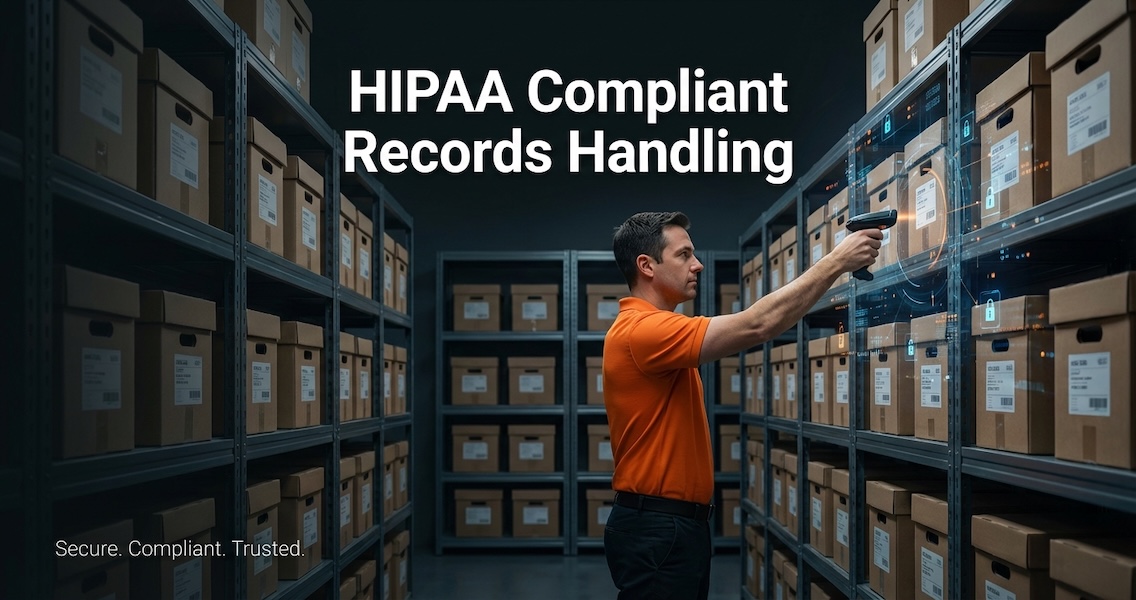
1. What HIPAA-Compliant Records Handling Really Means For Your Organization
HIPAA-compliant records handling is more than locking a file room or encrypting a server. It is a coordinated program that governs every record containing protected health information, from creation through final destruction.
In North Carolina, covered entities and business associates must manage PHI across clinics, hospitals, insurance offices, and support vendors in a way that consistently meets HIPAA Privacy and Security Rule requirements.
From Policy To Daily Practice
Effective HIPAA handling starts with written policies that define who may access PHI, where it is stored, how long it is retained, and how it is disposed of. Those policies then need to map to daily workflows, including indexing charts, labeling boxes, logging access, and documenting destruction.
As a records management company in Charlotte, we see that many compliance gaps emerge not from missing policies, but from inconsistent application in day-to-day document handling.
Physical And Digital Records Under One Governance Model
HIPAA regulates PHI in any format, so your binders of intake forms and your EHR database both fall under the same regulatory umbrella. A unified records management approach helps ensure that offsite boxes, scanned images, email attachments, and backup media all follow a consistent set of safeguards.
We align business records management controls for paper and digital content, so your teams do not have to manage separate, conflicting systems.
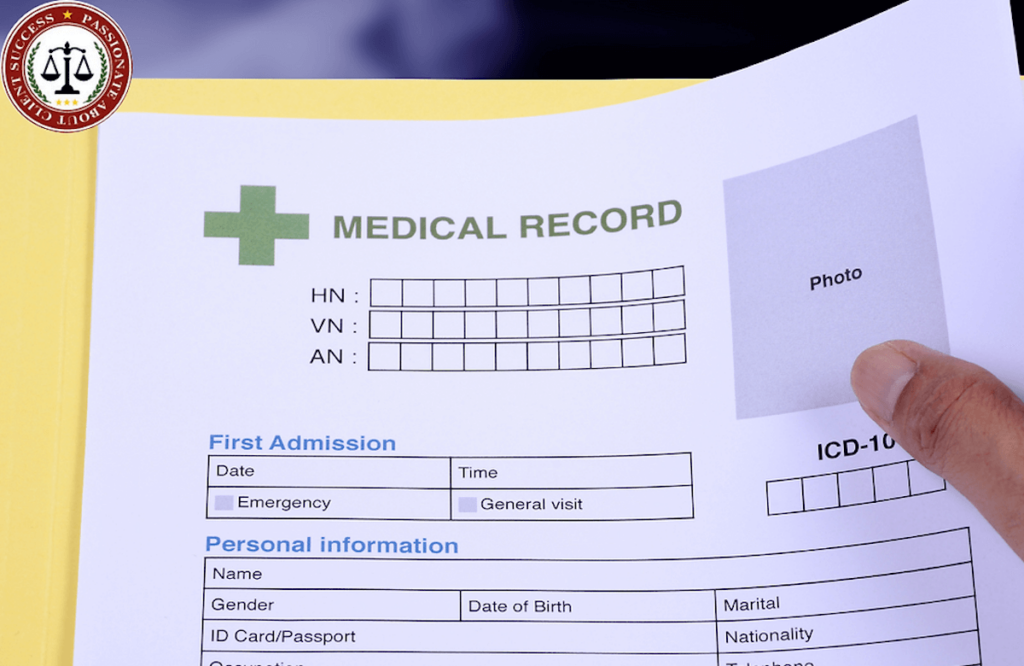
2. Core HIPAA Requirements That Shape Records Handling
HIPAA does not specify file cabinet models or scanning resolutions, but it does mandate safeguards that drive how we design compliant records management services. These safeguards fall into administrative, physical, and technical categories.
Each category has direct implications for how you store paper, manage electronic records, and work with a records management company in Charlotte or elsewhere in North Carolina.
Administrative Safeguards For Records
Administrative safeguards include risk analysis, workforce training, sanctions, and contingency planning. For records, that means documented retention schedules, defined roles for PHI access, incident response plans, and regular evaluations of your storage and destruction processes.
We often begin with a risk-based review of how PHI flows through your intake, billing, clinical, and back-office departments, then we design handling procedures that close identified gaps.
Physical And Technical Safeguards
Physical safeguards address facility access controls, workstation security, and device/media controls. For paper records, that includes secured offsite storage, controlled onsite access, and documented media disposal.
Technical safeguards cover access controls, audit controls, integrity protections, and transmission security for electronic PHI, which is why scanned images and digital repositories must include user authentication, logging, and encryption.

3. Building A HIPAA-Compliant Records Lifecycle From Creation To Destruction
HIPAA-compliant records handling is most effective when you view it as a lifecycle, not a series of isolated tasks. That lifecycle typically includes creation, active use, inactive storage, and final destruction.
For healthcare organizations in North Carolina, this lifecycle must align with state and federal retention rules, payer requirements, and internal risk tolerance.
Defining Retention And Disposition Rules
Clear retention rules help you avoid both premature destruction and over-retention of PHI. Over-retention can increase breach exposure, while premature destruction can create regulatory and litigation risk.
We help map specific document types, such as medical records, billing files, imaging, and HR records, to retention schedules that support both HIPAA and other applicable regulations.
Operationalizing The Lifecycle
Once rules are defined, they must be tied to operational steps for filing, indexing, boxing, transferring to offsite storage, and scheduling for secure shredding. This is where many organizations benefit from a coordinated business records management partner.
Our systems can flag boxes and files for destruction at end of life, which supports consistent, HIPAA-aligned disposition without adding manual workload to your clinical teams.
This infographic outlines the five key steps for HIPAA-compliant records handling. Learn secure, compliant processes for managing patient information.
4. Secure Offsite Document Storage In Charlotte And HIPAA Compliance
For many healthcare practices, clinics, and billing companies in the Charlotte area, on-premises storage is no longer sufficient for HIPAA-compliant records handling. Space constraints, limited security controls, and lack of environmental protection create unnecessary risk.
HIPAA-compliant document storage with a trusted offsite partner helps you centralize PHI, enforce standardized access controls, and maintain a clear chain of custody for all boxes and files.
What Makes Offsite Document Storage HIPAA-Compliant
Key features include restricted facility access, 24/7 monitoring, fire suppression, environmental controls, and detailed inventory tracking at the box and file level. Combined, these controls satisfy HIPAA’s expectations for physical safeguards and device/media controls.
Our offsite facilities serving North Carolina are designed as high-security archives that support both long-term retention and rapid retrieval for audits, patient requests, and legal holds.
From Disorganized Closets To Structured Archives
We often move clients from overflowing closets, basements, and file rooms into indexed, barcoded offsite storage. This shift improves compliance and frees up clinical and administrative space.
By integrating offsite storage with our broader records management services, you maintain visibility and control over every box while reducing day-to-day handling risk.
5. Document Scanning Services And Digital PHI Under HIPAA
As organizations in Charlotte modernize, they often ask how to digitize archives and active files without creating new HIPAA exposure. The answer lies in structured, secure document scanning services that treat every step as PHI handling, not simple imaging.
From pickup to scanning, indexing, quality control, and secure storage of images, each stage must support confidentiality, integrity, and availability of PHI.
Controlled Scanning Workflows
We use controlled environments and documented workflows to ensure that charts, explanation-of-benefits documents, and registration forms are tracked, scanned, and returned or shredded according to policy. Access to scanning areas and systems is restricted to trained personnel.
Digital files are output in formats compatible with your practice management or EHR systems, with indexing fields that support rapid, authorized retrieval.
Digital Access And Hybrid Records Management
Many organizations adopt a hybrid model, storing inactive paper offsite and keeping frequently accessed PHI in digital repositories. Our scan-on-demand services allow you to request scanning of specific files from offsite storage as needed.
This approach supports efficient, HIPAA-aligned workflows without requiring you to digitize every legacy record at once.

6. Secure Document Shredding And HIPAA-Compliant Destruction
HIPAA requires covered entities and business associates to destroy PHI so it cannot be reconstructed or read. Simple office shredders and ad hoc disposal practices rarely meet that standard, especially at scale.
Secure document shredding with documented chain of custody provides the defensible destruction process regulators expect when they evaluate your incident response and disposal practices.
Chain Of Custody For PHI Destruction
A verifiable chain of custody tracks PHI from your site to final destruction, recording container serial numbers, pickup times, handling personnel, and destruction events. This documentation is critical in the event of an audit or investigation.
Our secure shredding services for North Carolina clients include Certificates of Destruction that align with HIPAA’s expectations for disposal of PHI.
Integrating Destruction With Retention
Destruction should not be random or purely volume driven. Instead, it should follow your retention schedule so only records that have met their legal and operational requirements are destroyed.
We align scheduled or on-demand shredding with retention triggers, so your HIPAA-compliant document storage and destruction work together as a unified program.

7. The Role Of Audits In Strengthening HIPAA-Compliant Records Management
Even well-designed programs can drift over time as staffing, technology, and regulations change. Regular audits are essential to verify that policy and practice remain aligned for HIPAA-compliant records handling.
Audits help you identify gaps such as inconsistent box labeling, undocumented destruction, or uncontrolled personal storage of PHI by staff.
What A Records Management Audit Covers
A comprehensive audit looks at intake, filing, onsite storage, offsite storage, scanning, access controls, and shredding practices. It also reviews retention schedules, business associate agreements, and training records.
Our records management audit assesses each stage of your document lifecycle and provides practical recommendations for strengthening compliance and efficiency.
Turning Findings Into Action
Audit results should lead to prioritized, realistic actions that your team can implement without disrupting patient care. Common actions include revising procedures, improving labeling, consolidating storage, and updating training content.
We work with your leaders to sequence remediation steps so you can address the highest HIPAA risks first while planning broader process improvements.

8. Industry-Specific Considerations For HIPAA Records Handling
While HIPAA focuses on healthcare, many adjacent sectors in North Carolina manage PHI or HIPAA-adjacent data, including insurers, billing vendors, and third-party administrators. Each sector faces unique workflow and compliance pressures.
Tailored records management services help address those differences while maintaining a consistent HIPAA-compliant foundation.
Healthcare Providers And Business Associates
Hospitals, physician practices, outpatient centers, and behavioral health providers must coordinate PHI across clinical, administrative, and financial departments. Business associates such as billing companies and transcription services also handle PHI regularly.
Our industry-specific solutions support these organizations with integrated storage, scanning, and shredding that respect both HIPAA and payer-specific documentation requirements.
Other Regulated Industries Handling Sensitive Records
Finance, legal, and government entities in North Carolina manage records that, while not always PHI, carry similar confidentiality and auditing expectations. A unified, disciplined records program helps them meet HIPAA-like and other regulatory mandates.
By standardizing retention, storage, and destruction practices, these sectors reduce cross-regulation conflicts and simplify oversight.
9. Choosing A Records Management Partner In Charlotte, North Carolina
Selecting a records management company in Charlotte is a strategic decision for HIPAA compliance. You are not only choosing a vendor, you are delegating custody of PHI and relying on that partner’s physical and procedural controls.
Due diligence should cover facility security, technology platforms, certifications, policies, and experience with HIPAA-regulated entities.
Key Capabilities To Evaluate
Look for integrated solutions that include secure document storage, document scanning services, and secure document shredding, all supported by documented chain of custody. It is important that the provider understands healthcare workflows and North Carolina regulatory nuances.
Our role is to be a long-term partner in information governance, not just a storage vendor, which is why we support the full document lifecycle across healthcare and other regulated industries.
Working With A Local, High-Security Facility
For organizations in the Charlotte metro area and across North Carolina, local service means faster retrievals, responsive support, and better understanding of regional healthcare networks. It also simplifies logistics for pickups, deliveries, and on-site consultations.
We design our services so your teams can focus on patient care while we manage the records infrastructure behind the scenes.

10. Practical Tips To Strengthen HIPAA-Compliant Records Handling Today
Many organizations already have pieces of a strong HIPAA program in place but need practical steps to tighten controls. Focusing on a few high-impact areas can significantly reduce risk.
The following actions can be implemented quickly, often with support from a records management partner.
Five Immediate Improvements To Consider
- Consolidate paper records from uncontrolled areas into structured, HIPAA-compliant document storage.
- Standardize box and file labeling to include patient identifiers, record types, and retention dates.
- Adopt scheduled secure document shredding services for routine PHI destruction.
- Begin a phased scanning program for high-use records to improve access controls and auditing.
- Schedule a records management audit to baseline your current environment and prioritize improvements.
These steps help you move from reactive, file-by-file decisions to a predictable, compliant framework for handling every record that contains PHI.
Our team can help you design a roadmap that fits your volume, budget, and regulatory profile without interrupting daily operations.
Conclusion
HIPAA-compliant records handling is no longer optional or theoretical for organizations in North Carolina. With hundreds of large breaches and millions of records exposed each year, regulators and patients alike expect disciplined control over every page and every file that contains PHI.
By unifying HIPAA-compliant document storage, document scanning services, and secure document shredding under a clear lifecycle and supported by professional records management services, you can reduce risk, improve efficiency, and demonstrate compliance when it matters most.
If you are evaluating a new records management program in the Charlotte area or reviewing your current controls, we can help you design a secure, efficient, and compliant solution tailored to your environment.