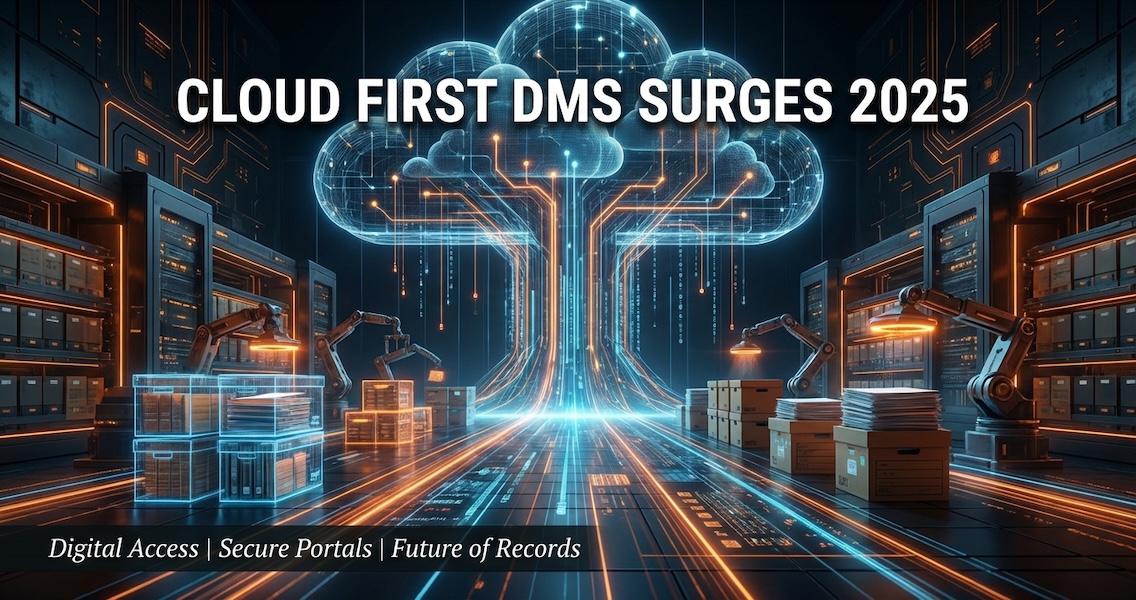
Cloud deployments accounted for 70.34% of 2025 DMS revenue, which confirms what many North Carolina organizations are already experiencing: document management is rapidly shifting to cloud‑first and hybrid models that blend physical and digital control.
Key Takeaways
| Question | Answer |
|---|---|
| What does “cloud‑first DMS” mean in 2025? | It means new document systems are designed primarily for secure online access, automation, and remote work, with on‑premises tools used only where required for compliance or legacy applications. |
| Why are hybrid DMS models growing so quickly? | Hybrid DMS lets organizations keep sensitive or long‑term paper records in secure facilities while providing cloud‑like access through scanning, portals, and digital workflows, which is ideal for regulated sectors and HIPAA compliant document storage. |
| How do records management services support cloud‑first strategies? | Professional records management services integrate offsite storage, document scanning, digital access, and secure shredding into one managed lifecycle, which is essential for modern DMS programs. |
| Where should a North Carolina business start? | Begin with a structured assessment of paper and digital records, such as a professional records management audit, then prioritize high‑value and high‑risk records for digitization and hybrid storage. |
| How can physical storage support a cloud‑first DMS? | Secure offsite facilities combined with scan‑on‑demand and portals, such as secure document storage services, provide a physical backbone for hybrid DMS while users access records digitally. |
| What is the role of scanning in this transition? | Document scanning services convert paper into searchable digital assets and feed cloud‑based workflows, which is a core step for any cloud‑first or hybrid DMS strategy in 2025. |
1. Why Cloud‑First And Hybrid DMS Are Surging In 2025
By 2025, cloud‑first document management systems (DMS) are no longer experimental, they are the default approach for most new deployments across the U.S. and especially for growing organizations in North Carolina.
At the same time, many industries still rely on long‑term paper archives, tape, and legacy applications, so hybrid DMS models that connect physical records to digital workflows are expanding just as quickly.
Cloud‑First: Designed For Remote Access And Automation
A cloud‑first DMS is built around secure online access, role‑based permissions, and automated workflows, with support for mobile teams and distributed offices.
In 2025, cloud‑first means users expect to locate, view, and share records in seconds, while IT leaders expect strong encryption, monitoring, and compliance controls built into the platform.
Hybrid: The Bridge Between Paper And Digital
Hybrid DMS connects secure physical storage with digital access channels, which is critical for organizations that must retain original documents for years while still working in cloud‑based applications.
We see this most clearly in healthcare, finance, government, and legal environments, where retention, audit trails, and privacy rules require a careful balance of on‑premises, offsite, and cloud records.

2. Business Drivers Behind Cloud‑First And Hybrid DMS In North Carolina
Organizations across North Carolina are experiencing the same pressures we hear nationwide, more remote work, stricter compliance, rising cyber risk, and limited office space for paper storage.
Cloud‑first and hybrid DMS models directly address these pressures while improving access, auditability, and lifecycle control for critical records.
From Paper Backlogs To Digital Readiness
Paper‑heavy processes create delays, inconsistent access, and higher risk of loss or unauthorized disclosure.
By combining document scanning services with secure offsite storage and digital portals, we help clients move from paper backlogs to reliable digital readiness without disrupting daily operations.
Compliance And Risk Reduction
For many clients, the key driver is not convenience, it is risk management and regulatory compliance.
Hybrid DMS strategies allow sensitive files to be held in controlled environments while providing the audit trails, retention controls, and access logs that regulators expect.

3. How Cloud‑First DMS Changes Records Management Practices
Cloud‑first document management is reshaping how organizations structure business records management, from capture and indexing to access, retention, and destruction.
In a cloud‑first model, records are born digital whenever possible and paper inputs are quickly converted into secure digital formats that integrate with core business systems.
Lifecycle‑Driven Records Management Services
Modern records management services are no longer limited to warehousing cartons of paper in a remote building.
Instead, we provide lifecycle‑driven programs that connect document intake, scanning, secure document storage, and secure document shredding into a unified framework that supports cloud workflows.
Digital Access Without Losing Physical Control
For many Charlotte‑area organizations, the goal is to keep physical records in a secure, climate‑controlled environment while giving staff the experience of working in a fully digital DMS.
Scan‑on‑demand, indexing, and portal access allow that balance, users work in digital interfaces while records managers maintain strict control over originals and retention schedules.
A visual guide showing a 5-step approach to adopting a cloud-first DMS. It highlights the 2025 surge of cloud-first and hybrid document management systems.
4. Hybrid DMS As A Compliance Strategy For Regulated Industries
Hybrid document management is particularly important in sectors where regulations and audits shape how information is stored, accessed, and destroyed.
For example, healthcare providers in North Carolina require HIPAA compliant document storage, strict chain of custody, and verifiable destruction to protect patient privacy.
Industry‑Specific Requirements
Our work across healthcare, finance, legal, government, and education has shown that each industry has unique record types, retention timelines, and access expectations.
The right hybrid DMS must match those industry requirements, which is why we provide tailored programs described in our document management solutions by industry overview.
Audit Trails, Retention, And Defensible Destruction
Compliance is not only about storage, it is also about proving how information moved through its lifecycle.
Hybrid DMS models rely on structured retention schedules, secure document shredding at the right time, and complete documentation of storage and destruction activities.

5. The Role Of Document Scanning Services In Cloud‑First DMS
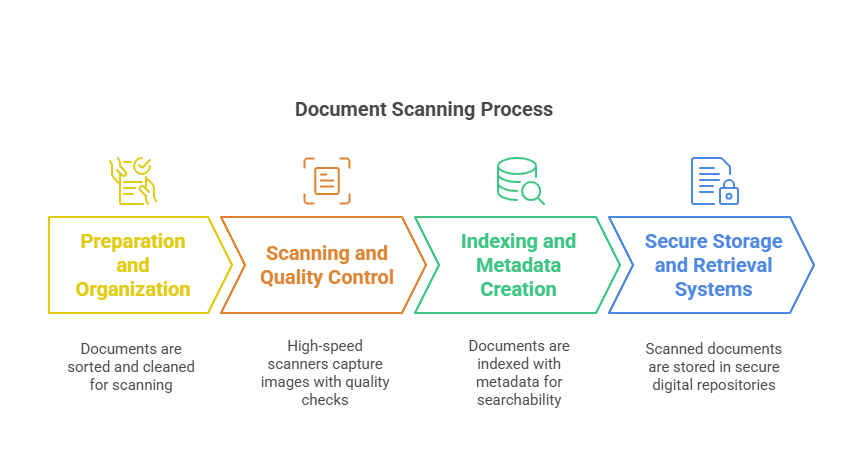
Document scanning is the operational bridge between paper‑based history and cloud‑based workflows, and in 2025 it is a core enabler of any cloud‑first strategy.
For many Charlotte businesses, transitioning to cloud‑first DMS begins with targeted scanning projects that prioritize active files, high‑risk records, and departments that require faster access.
From Bulk Backfile Scanning To Scan‑On‑Demand
We typically see two scanning approaches, large backfile scanning to digitize entire archives and scan‑on‑demand to convert specific records as users request them.
Both approaches support cloud‑first DMS, since the resulting digital images, OCR, and metadata feed secure portals and business applications.
Integrating Scanned Records With Existing Systems
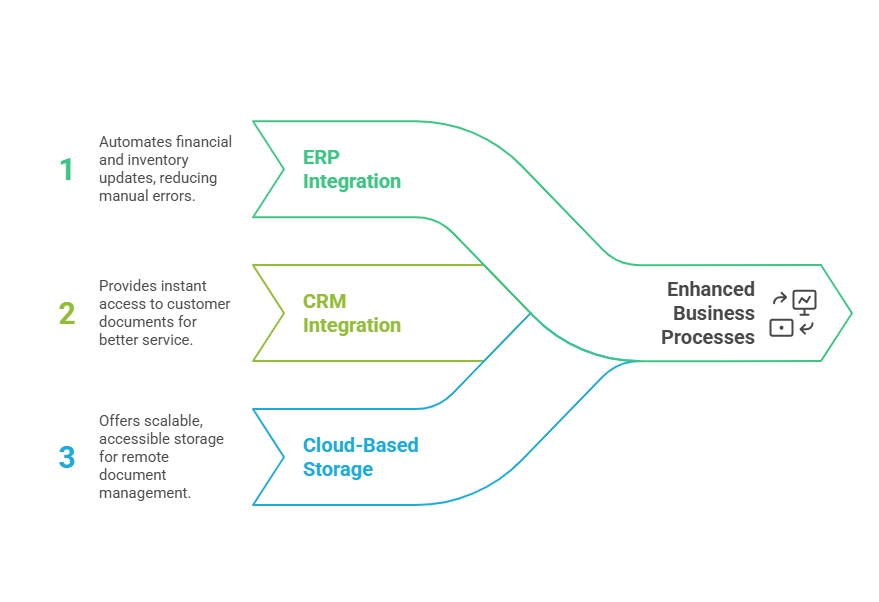
Our document scanning services are designed to integrate with your chosen DMS or content platform so that scanned records are searchable, indexed, and permissions‑controlled from day one.
This is particularly important for organizations that rely on line‑of‑business systems, practice management software, or industry‑specific platforms that must interact with a central DMS.

6. Secure Document Storage In Charlotte As A Hybrid DMS Backbone
While cloud storage receives most of the attention in 2025, secure offsite facilities remain a critical part of hybrid DMS, particularly for organizations that cannot move every record fully into the cloud.
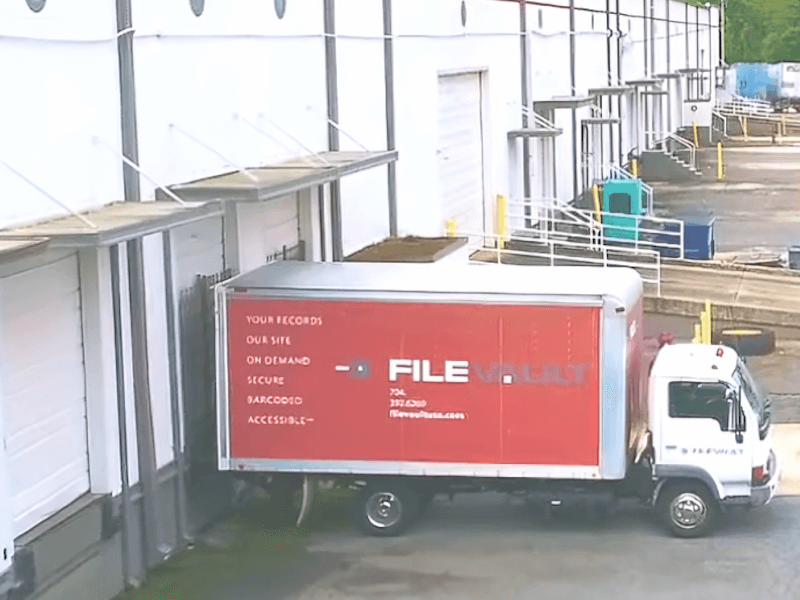
Our secure document storage Charlotte services provide the physical backbone for hybrid environments where digital access and physical retention must work together.
State‑Of‑The‑Art Facilities And Chain Of Custody
We maintain climate‑controlled, monitored facilities with barcode or RFID tracking, which is essential for both compliance and internal accountability.
Every carton and file can be tracked across its lifecycle so that retrievals, scans, and destruction activities are fully documented.
Scan‑On‑Demand And Digital Portals
Hybrid DMS requires more than secure shelving, it requires fast, controlled access to the information stored in those cartons.
Our scan‑on‑demand services retrieve the physical file, digitize it, and deliver it securely through a portal or secure transfer, giving users a cloud‑like experience with the protection of offsite storage.

7. Secure Document Shredding In A Cloud‑First World
As more records move into cloud‑first and hybrid systems, end‑of‑life control becomes even more important, because digital convenience can increase the risk of uncontrolled copies and legacy paper files.
Comprehensive secure document shredding is therefore a non‑negotiable part of any 2025 DMS strategy.
Defensible Destruction For Paper And Media
We provide secure shredding of paper records and physical media so that our clients can execute retention schedules confidently.
In a hybrid DMS, this might involve shredding original paper after imaging and quality checks or destroying older archives once digital and regulatory requirements are fully met.
Certificates Of Destruction And Audit Support
Each destruction event is documented with a certificate of destruction and a traceable chain of custody, which is essential for audits and legal defense.
By integrating shredding schedules with storage and scanning activities, we help organizations maintain a consistent, defensible lifecycle for every category of record.
8. Planning A Cloud‑First Or Hybrid DMS Roadmap
Cloud‑first and hybrid DMS adoption should not be an all‑or‑nothing decision, especially for organizations with decades of records and complex regulatory exposure.
A practical roadmap focuses on high‑value processes first, then expands to broader archives as workflows and policies stabilize.
Assessment And Records Management Audit
We typically start with a structured assessment that reviews inventory, retention requirements, risk categories, and current workflows across physical and digital records.
Our complimentary records management audit provides this type of analysis and identifies quick wins, cost‑savings, and risk‑reduction opportunities.
Prioritization And Phased Implementation
Most North Carolina clients choose a phased rollout, starting with specific departments such as HR, AP, legal, or clinical records that are struggling most with paper or fragmented systems.
This approach allows teams to refine policies, test integrations, and prove value before scaling to the entire organization.
9. Selecting A Records Management Company In Charlotte For Hybrid DMS Support
Choosing the right records management company Charlotte is critical when your goal is to support cloud‑first or hybrid DMS rather than only offsite storage.
Your provider should be able to support integrated services that span storage, scanning, digital delivery, and destruction, with proven compliance controls.
Key Capabilities To Look For
- High‑security, climate‑controlled facilities with robust access controls and monitoring.
- Document scanning capabilities with indexing, OCR, and integration with your DMS or cloud platforms.
- Scan‑on‑demand and secure digital delivery options for hybrid workflows.
- Certified secure shredding services with documented chain of custody.
- Experience with regulated industries and complex retention requirements.
We have provided integrated business records management across North Carolina since 2001, combining physical and digital services under a single program.
10. Cost, Space, And Risk: The Business Case For Cloud‑First And Hybrid DMS
Beyond technology trends, the surge in cloud‑first and hybrid DMS in 2025 is driven by straightforward economics and risk reduction.
Office leases in Charlotte and across North Carolina are not getting cheaper, and manual, paper‑based workflows are increasingly difficult to justify.
Reducing Space And Handling Costs
Offloading cartons of archives to a secure facility and digitizing active records reduces on‑site storage needs and administrative handling time.
Staff gain faster, more consistent access through digital channels, and your organization reduces the hidden cost of searching for misplaced folders.
Lowering Legal And Compliance Exposure
Cloud‑first and hybrid DMS provide better visibility into what you have, where it resides, and how long you must keep it.
With consistent retention policies, controlled destruction, and audit‑ready documentation, you minimize the risk of over‑retention, lost files, and unmanaged data during investigations or audits.

Conclusion
The surge of cloud‑first and hybrid document management systems in 2025 reflects a long‑term shift in how organizations across North Carolina handle their records, balancing digital access with physical security and regulatory control.
By combining secure offsite document storage Charlotte, professional document scanning services, and secure document shredding within an integrated lifecycle, you can support modern cloud‑first workflows without compromising on compliance or risk management.
If you are evaluating next steps for your own cloud‑first or hybrid DMS strategy, we are ready to help you assess options, design a practical roadmap, and implement a tailored records management program.
Request a customized records management quote or Contact Us to learn more about how we can support your transition.